
Fintech and payments Case study
Reactor: AI assistant and Web3 data back end
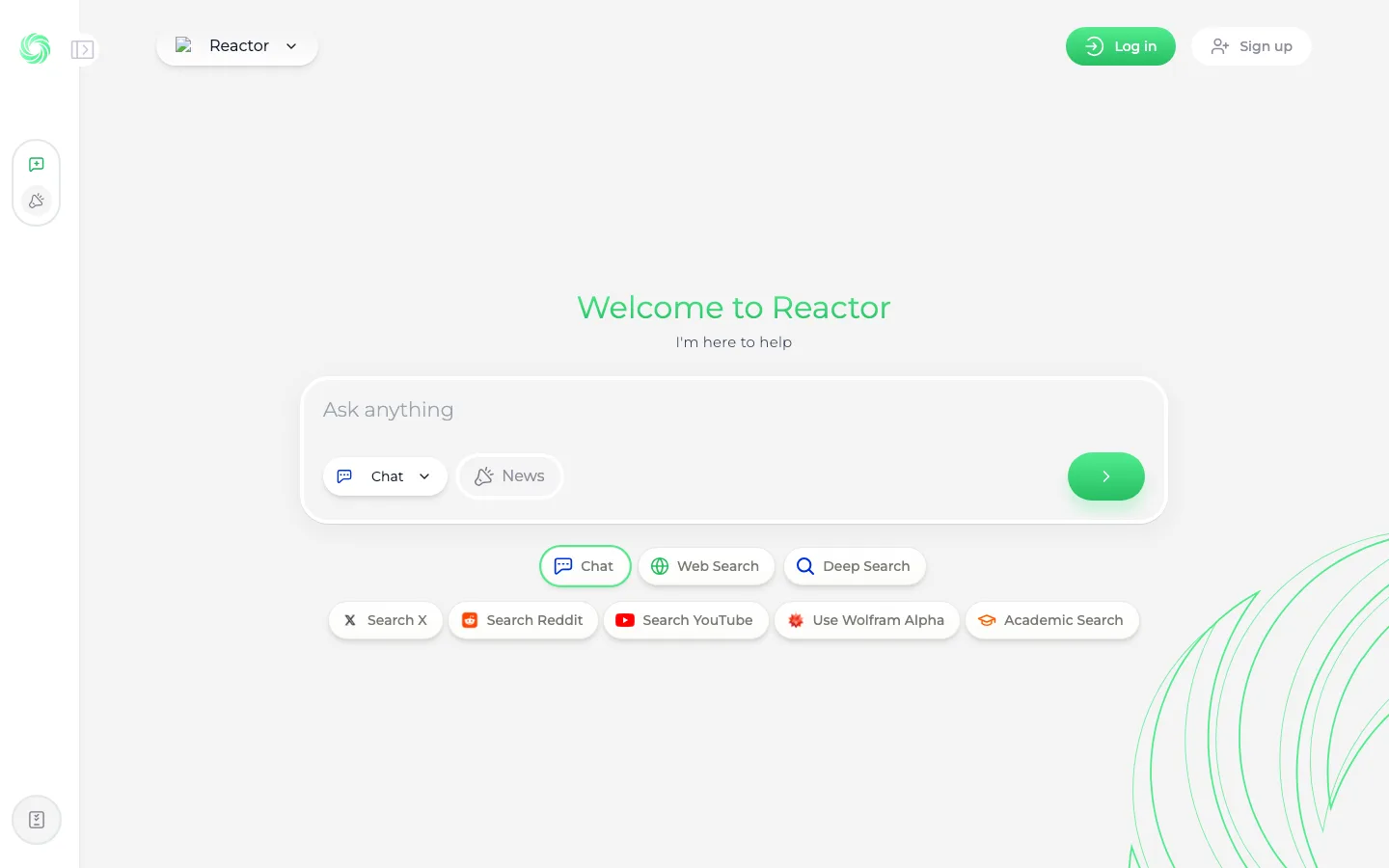
A Node.js back end for Reactor, an AI chat assistant with Web3 tools: streaming chat and voice, a keyed language-model API for businesses, and a crypto service for token audits, swaps and rewards.
- Client
- Reactor
- Service
- Web apps, Integrations, AI
- Years
- 2024–2025
- Stack
- OpenAI, TypeScript, Node.js, PostgreSQL and 10 more
- Platforms
- Web
Overview
Reactor is an AI assistant that combines everyday chat with tools for crypto users. We built its back end in Node.js: user accounts and single sign-on, real-time streaming chat with stored conversations, file uploads and streamed text-to-speech, a separate keyed API that businesses use to reach the same models, and a crypto service for market data, token security checks, swaps and rewards.
The challenge
Answers have to stream in real time over WebSockets, the same models are offered to consumers and, with limits and usage accounting, to business customers, and the crypto side needs fresh market data and token checks from several outside sources.
What we built
- Accounts, several sign-in methods and single sign-on for client apps
- Real-time chat over WebSockets with streamed answers and stored conversations
- File uploads and real-time text-to-speech streaming
- A business API with API keys, rate limits, token accounting and a usage analytics dashboard
- Language-model routes across several providers, and a retrieval prototype with LangChain and Ollama
- A crypto service: market data, token security audits, swaps and limit orders, portfolio history and discovery
- Quests and reward tracking with smart-contract interaction, and reward reports with Excel export
- Notifications by Firebase, Expo and chat platforms, and scheduled jobs
How a system like this fits together
Reference architecture: AI assistant and Web3 data back end
Simplified reference architecture, not a client schematic.
- A user signs in to the chat app (password, social login or single sign-on) and opens a WebSocket to the user and chat API, which also takes file uploads.
- The API checks the account and loads the stored conversation from PostgreSQL.
- The prompt goes to a language-model provider. The answer is streamed back over the WebSocket, saved to the conversation and, for voice, streamed on as text-to-speech audio.
- A business customer calls the keyed business API instead: the API key is checked, the request is rate-limited, the model call is made and usage is recorded in PostgreSQL for analytics.
- Crypto requests go to the crypto service, which pulls market data and token security checks from outside sources, calls smart contracts for swaps and rewards, and keeps crypto, quest and reward data in MongoDB (vector search in Qdrant).
Technology used
| Layer | Choice | Purpose |
|---|---|---|
| AI | OpenAI, Vertex AI, Ollama, LangChain | chat, completions and retrieval |
| APIs | Node.js, Fastify, Express, TypeScript | user, chat, business and crypto services |
| Data | PostgreSQL, MongoDB, Redis, Qdrant | accounts and chats, crypto data, cache, vector search |
| Delivery | Docker | build and deploy |
| Real time | WebSockets | streamed chat answers and speech |
| Web3 | ethers | swaps, signing and rewards |
What happened next
- Delivered
The work described above was delivered to the client.
- Operational facts
- Our work on this project spanned 2024–2025.
Could this be your project?
- You need a web application with user accounts, admin tools and reporting. Website and web app development
- Your product has to connect to payment, accounting, messaging or other third-party systems.
- You work in fintech and payments and want a team that has built for it before. Fintech and payments work
Questions about this project
How long did this project take?
Our work on it ran from 2024 to 2025, with 600+ engineering hours logged in total.
What technology was used?
OpenAI, TypeScript, Node.js, PostgreSQL, MongoDB, Redis, Docker, Fastify, Express, Qdrant, LangChain, Ollama, Vertex AI, ethers.
Similar work
Also PostgreSQL, same industry
A .NET trading engine, API and Next.js control console for Rainbow Capital that runs configurable US equity options strategies under per-underlyer risk limits, with daily profit and loss reports to Slack.
Also PostgreSQL, also a web app
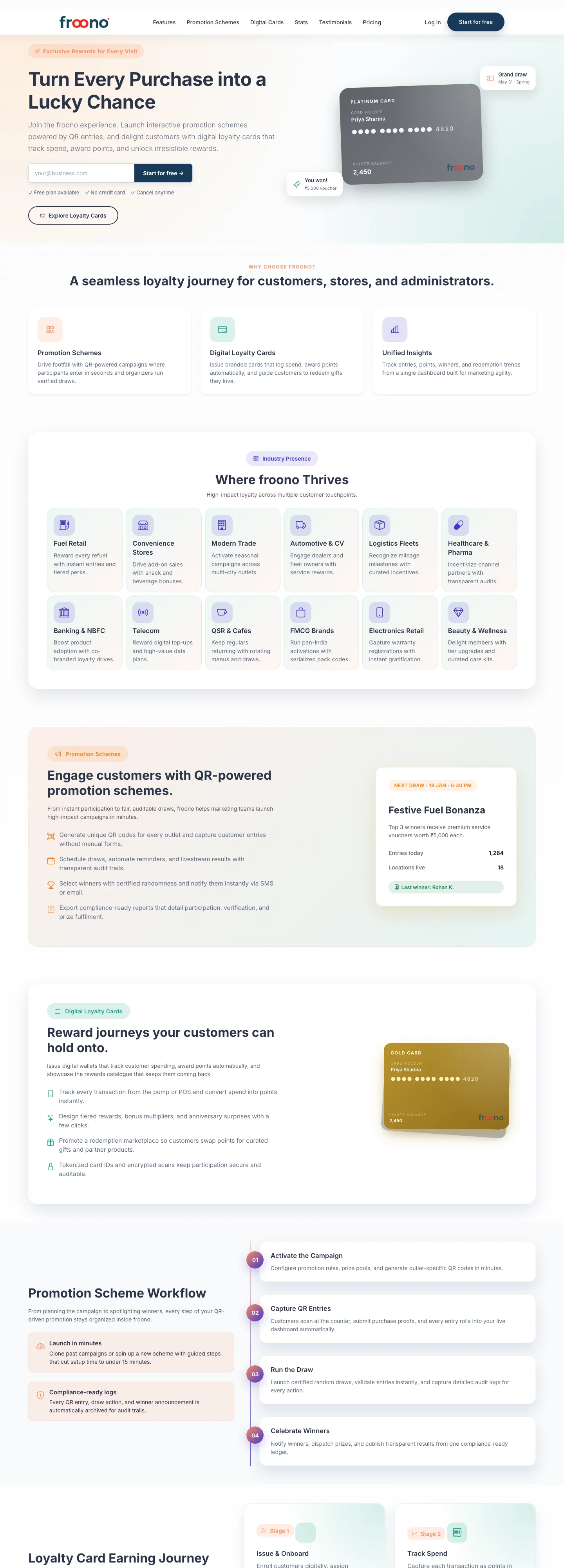
Froono: customer loyalty platform
A multi-tenant customer loyalty platform: web admin, customer API, a mobile app and a PWA, with receipt checking, lucky draws, WhatsApp campaigns, AI image generation and online payments.
Also Node.js and MongoDB, also an integrations project
Native Stripe and PayPal checkout in the iOS app of Beliri, a marketplace for new and pre-owned designer goods, and a Shopify connector that brings merchant catalogues into the marketplace.