
Retail and eCommerce Case study
Froono: customer loyalty platform
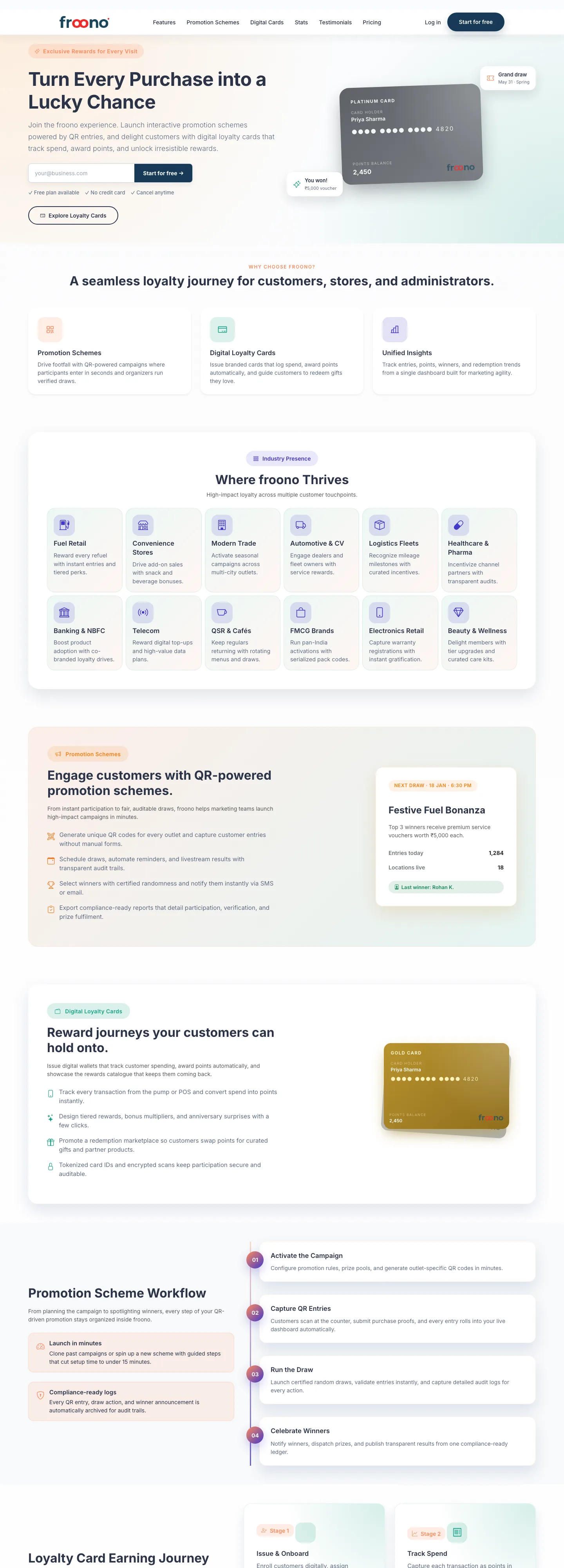
A multi-tenant customer loyalty platform: web admin, customer API, a mobile app and a PWA, with receipt checking, lucky draws, WhatsApp campaigns, AI image generation and online payments.
- Client
- Froono
- Service
- Web apps, Mobile apps, Integrations, AI
- Years
- 2023–2026 (3 years)
- Stack
- AWS S3 and CloudFront, React Native (Expo), React (Vite PWA), TypeScript and 6 more
- Platforms
- iOS, Android, Web
Overview
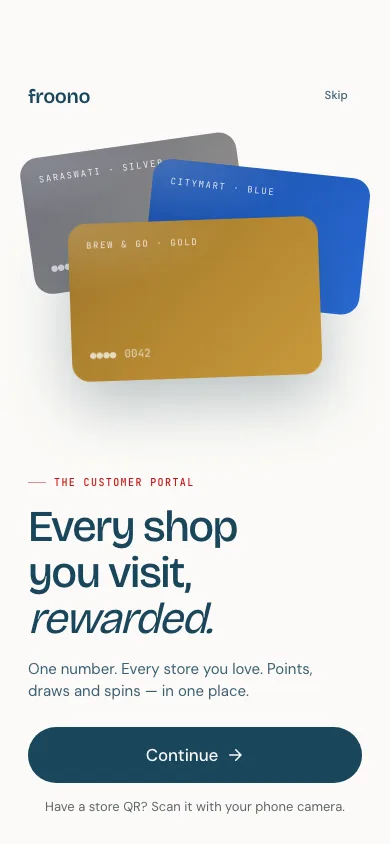
Froono is a customer loyalty platform for retail chains. Companies, their stores and their customers each have their own scope. Staff run loyalty cards, reward rules, lucky draws and marketing from a web admin. Customers use an Expo mobile app and a web PWA that talk to one REST API. It has been in continuous development since 2023.
The challenge
Give each company and store control over its own cards, rules, draws and campaigns without any of it leaking across tenants, and check customer purchases without a till integration: customers upload a bill, the system reads it, and an admin accepts or rejects it. On top of that sit scheduled draws, scheduled marketing and messaging, and paid subscriptions. All of it has to run reliably in the background.
What we built
- Multi-tenant web admin (Company, Store, Customer) with superuser, company admin and store admin roles, and a reusable company/store scope picker used across forms
- Loyalty setup: card issuance programs with several card-number formats, card families (points, discount or visit-based), tiers with spending thresholds, reward plans and date-bound reward rules
- Purchase flow: customers upload a bill, OCR reads it, a scoring step checks store, product group, invoice number, amount, date and duplicates, and an admin accepts or rejects the purchase
- On acceptance: reward balance and ledger updates, visit-progress tracking, tier upgrades and a spin wheel unlocked by visits
- Lucky draws: schemes, participants (manual or automatic from accepted purchases), scheduled draw execution, winners, and winner banners generated and published on a schedule
- Marketing material designer with PDF and image export, scheduled posting to Facebook and Instagram pages, and a shared media library
- WhatsApp Cloud API campaigns, templates, conversations and webhook handling, with one unified schedule model and a calendar planner for marketing, messages and draws
- AI image generation jobs billed against wallets with a ledger, and a social-post flow that builds posts from public calendar events
- Subscriptions and online payments for company sign-up, discount coupons, and loyalty reports
- A customer REST API under /api/v1/ with token refresh, plus push notifications to browsers and to iOS and Android devices
- An Expo/React Native mobile app and a Vite/React PWA built in one pnpm and Turbo monorepo, sharing a typed API client and Zod validation schemas
- Celery workers and scheduled tasks for draws, posting, messaging and recovery of lost schedules; the PWA is delivered to AWS from a CI pipeline
How a system like this fits together
Reference architecture: multi-tenant loyalty and lucky-draw platform
Simplified reference architecture, not a client schematic.
- A customer opens the installable web app or the mobile app and uploads a bill.
- Both apps call one REST API (/api/v1/), served by the Django application, which also hosts the staff admin.
- Django reads the bill with Amazon Textract (OCR) and extracts the bill details. Subscription payments (Razorpay) and push notifications (Expo and Web Push) are also called by the application directly.
- Draws, scheduled posts, campaigns and AI image jobs are queued through Redis for the Celery workers and the scheduler.
- The workers send WhatsApp Cloud API campaign messages, publish scheduled posts and stories to Facebook and Instagram, and run Gemini image jobs; results are written back to PostgreSQL and S3.
What happened next
- Delivered
The work described above was delivered to the client.
- Operational facts
- Our work on this project spanned 2023–2026.
- It was maintained and extended over 3 years.
Could this be your project?
- You need a web application with user accounts, admin tools and reporting. Website and web app development
- You are planning an iOS or Android app, or have one that needs a stronger back end behind it. Mobile app development
- You work in retail and ecommerce and want a team that has built for it before. Retail and eCommerce work
Questions about this project
How long did this project take?
Our work on it ran from 2023 to 2026.
What technology was used?
AWS S3 and CloudFront, React Native (Expo), React (Vite PWA), TypeScript, Django, PostgreSQL, Redis, Celery, WhatsApp Cloud API, Razorpay.
Was it maintained and extended over time?
Yes. Our work on this project was maintained and extended over 3 years, from 2023 to 2026.
Similar work
Also TypeScript and PostgreSQL, also a web app
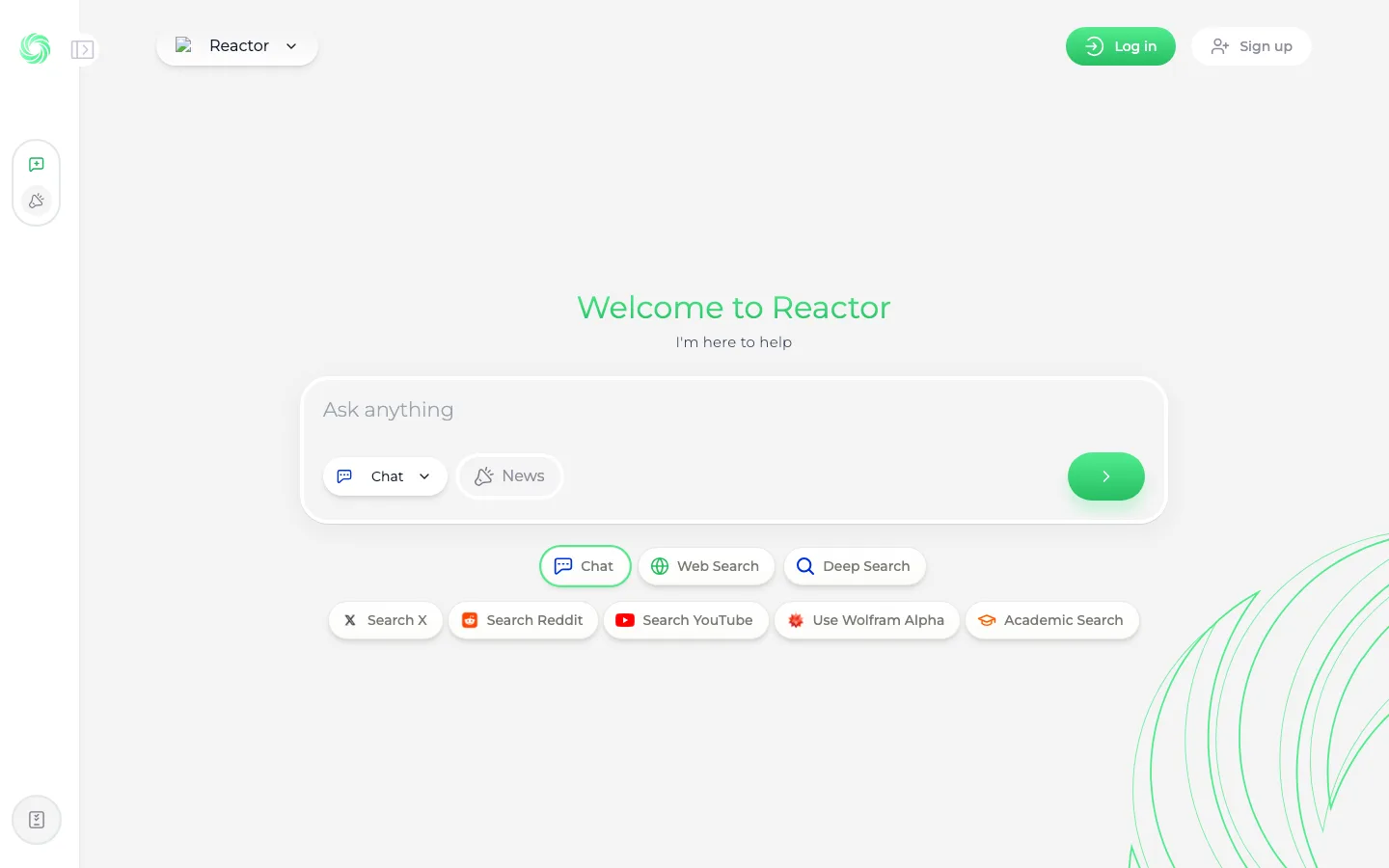
Reactor: AI assistant and Web3 data back end
A Node.js back end for Reactor, an AI chat assistant with Web3 tools: streaming chat and voice, a keyed language-model API for businesses, and a crypto service for token audits, swaps and rewards.
Also TypeScript and PostgreSQL, also an AI project
MCP server for a database-performance SaaS
A Model Context Protocol (MCP) server that lets customers use their own AI assistant to read their database findings and ask the platform to analyse a query, with scoped sign-in, read-mostly tools and an audit trail.
Also React and TypeScript, also an AI project
AI-assisted database performance SaaS
A SaaS platform that finds slow queries and missing indexes in live databases and returns ranked, AI-assisted fixes with risk and rollback, optionally as pull requests.