RAG development: AI answers grounded in your own content

Retrieval-augmented generation (RAG) lets a language model answer from your documents, pages and records instead of from memory. We build the whole pipeline: ingesting and cleaning content, chunking and embedding it, a search index with keyword and vector search, filters and reranking, answers with citations, and the jobs that keep the index current.
RAG and vector search
  • Ingestion, cleaning and chunking of your content
  • Hybrid keyword and vector search with filters
  • Answers with citations to the source passages
  • Scheduled refresh and answer checks before release

When RAG is the right choice

RAG suits assistants that must answer from a body of content that is too large or changes too often to put in every prompt:

  • Your content is larger than a model accepts in one request, such as a full help center, a product catalog or a set of codes and policies.
  • The content changes and answers must follow it. You update the index, not the model.
  • Users need to see where an answer came from, so each answer can cite its passages.
  • Different users may see different content. Filters at query time can limit what each user retrieves.

When RAG is not the right choice

A retrieval pipeline adds moving parts. Consider simpler options first:

  • Your content is small and fixed. If it fits in the prompt, put it there and skip the index.
  • The answers live in structured data, such as orders, stock or account balances. A database query gives exact results, and a model can call it as a tool.
  • You want a consistent tone, format or behavior. That is a job for prompting or fine-tuning. Microsoft's guidance notes that fine-tuning does not replace retrieval for current information.
  • No one can own the content. A RAG system is only as good as the pages it indexes, so someone has to keep them correct.

What we build with RAG

Typical projects, described in general terms.

Support chatbots

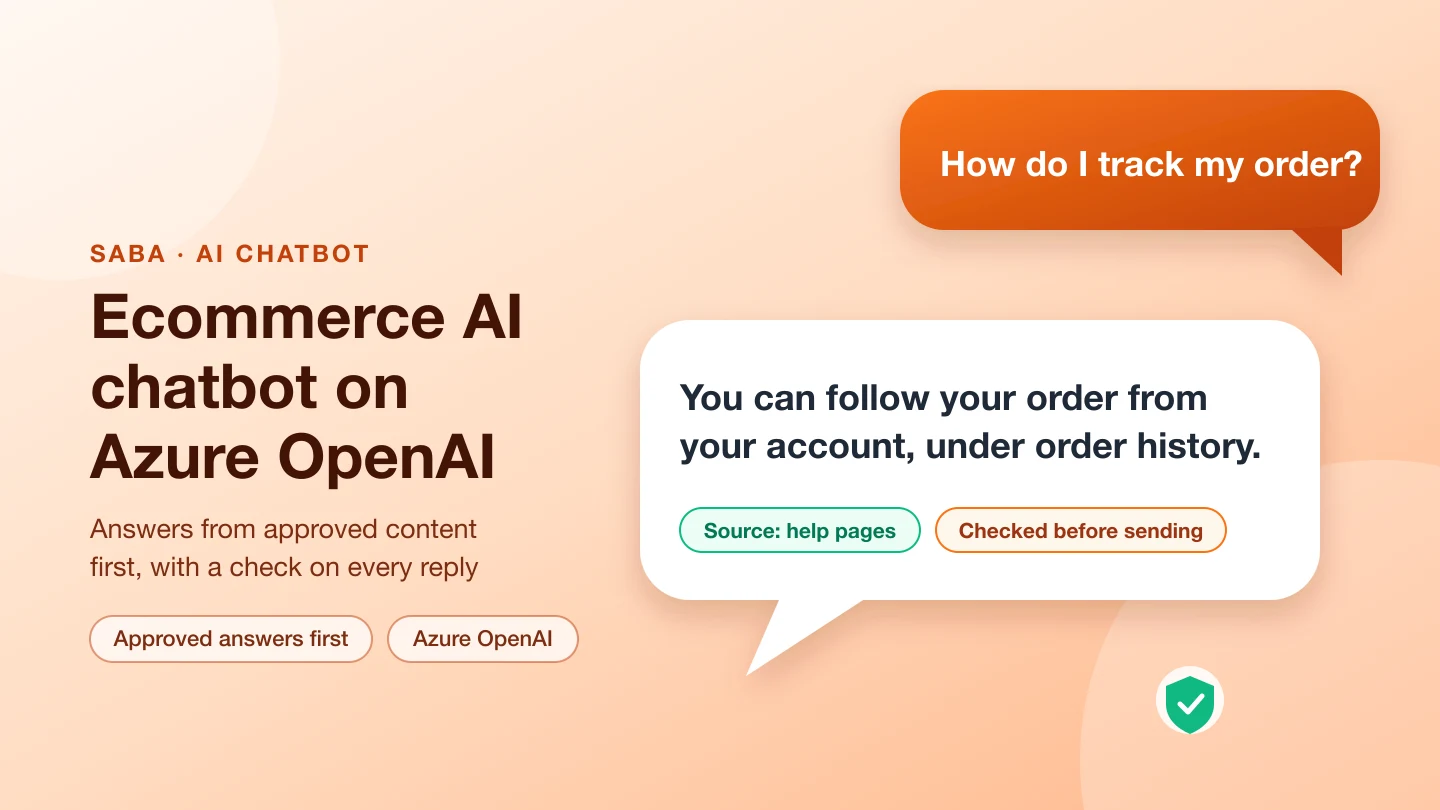
Assistants that answer customer questions from your help pages, policies and product content, and hand over to a person when they cannot.

Policy and regulation assistants

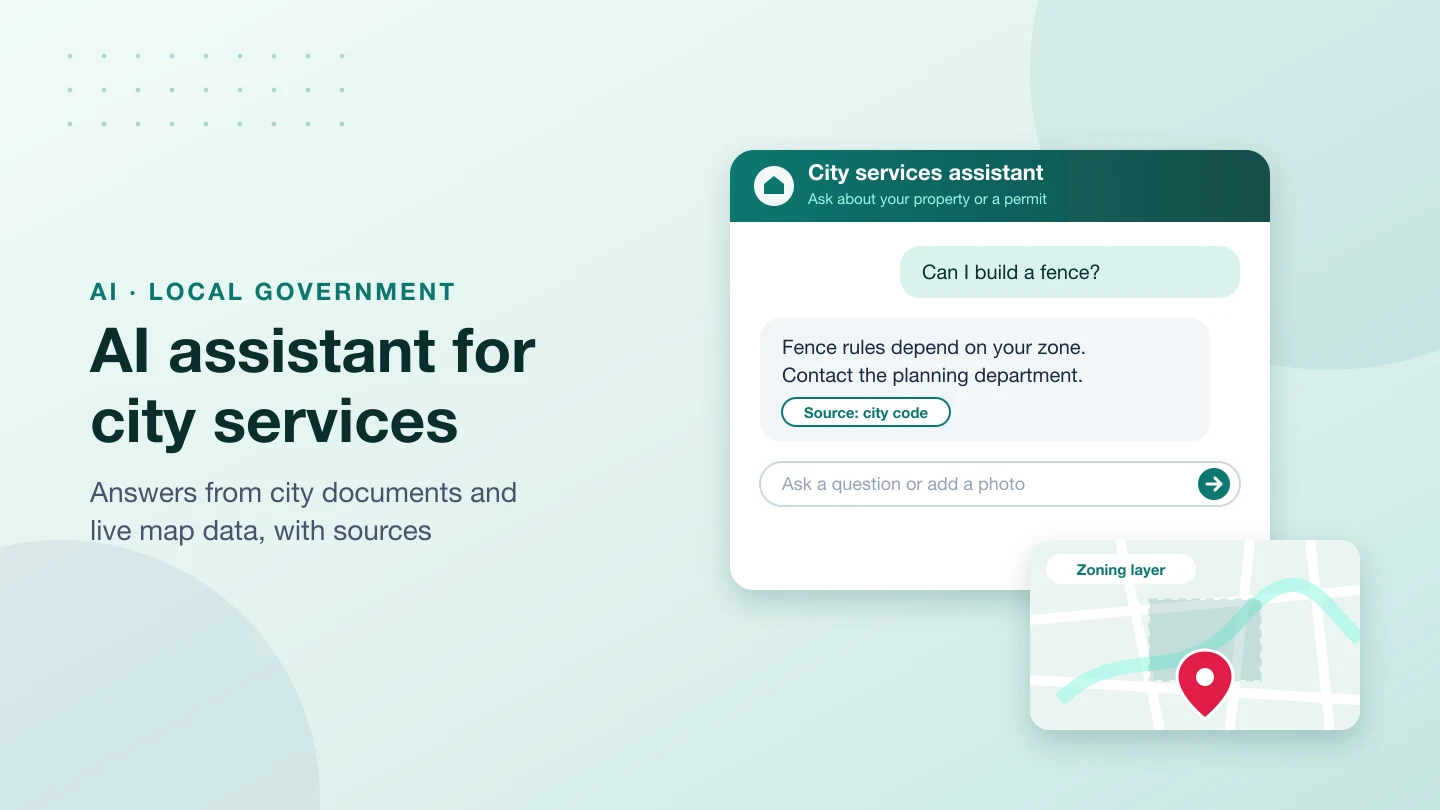
Answers from codes, ordinances or internal policies, with a citation to the section used and routing to the right department.

Ingestion pipelines

Scheduled jobs that crawl or pull content, clean it, chunk it, embed it and load the index, with checks that stop a bad run.

Hybrid search

Keyword and vector search in one query, so product codes and names match exactly and paraphrased questions still find the right passage.

Vector stores

Qdrant, pgvector in Postgres, Pinecone or Azure AI Search, chosen to fit your hosting and the data you already have.

Answer evaluation

A set of real questions with expected sources, run before each release to catch retrieval and answer regressions.

How a RAG pipeline works

Microsoft describes RAG as grounding a model's responses in your own content. Content is split into chunks, because models have input limits and a long page is poorly represented by one vector. Each chunk is turned into an embedding and stored with its text and metadata. At question time the system retrieves the most relevant chunks and gives only those to the model.

  • Chunking: Azure AI Search's guidance suggests fixed-size chunks with some overlap as a starting point, or chunks split on headings and sentences. Adding the document title to chunks from the middle of a document helps keep context.
  • Hybrid search: Azure AI Search runs keyword and vector queries in one request and merges them with Reciprocal Rank Fusion. Microsoft notes that product codes, jargon, dates and names often match better by keyword. Qdrant combines dense vectors, sparse vectors and BM25 with prefetch and fusion. pgvector's README suggests pairing it with Postgres full-text search.
  • Filtering: Qdrant filters on payload fields, and its docs advise creating payload indexes for those fields before loading data. In pgvector, an approximate index applies the WHERE clause after the index scan, so a filtered query can return fewer rows than asked. Its README lists fixes such as iterative scans and partial indexes.
  • Reranking: a second stage re-scores the first results. Azure AI Search's semantic ranker reranks the top 50 results. Pinecone offers integrated and standalone reranking with hosted models.
  • Separation: Pinecone namespaces keep each tenant's data apart within one index. Azure AI Search supports document-level security trimming and filter-based security at query time.

What a RAG system needs beyond the search index

  • A fresh index: content changes, so ingestion runs on a schedule. Azure AI Search supports incremental updates with mergeOrUpload and delete actions, and schema changes such as a changed field definition need a rebuild. A side-by-side index behind an alias avoids downtime.
  • A guard on ingestion: a crawl can fail or pull the wrong pages. We use host allow-lists, clean the content, mask fields such as prices that must come from the live system, and abort the load if a run looks wrong, so a bad crawl never replaces a good index.
  • Answers only from sources: the model is told to answer only from the retrieved passages and to say when they do not cover the question. An output check runs before the answer is shown. Approved answers to common questions can be served first.
  • Citations: each chunk keeps its source URL or section, so the answer can link to it and a reviewer can check it.
  • Evaluation: we keep a set of real questions with the passages that should answer them, and run it whenever chunking, the embedding model or the prompt changes. When we rebuilt one knowledge base with better chunking, the test set is what showed whether it helped.

How we work

  1. Look at the content and the questions first: what the sources are, how often they change, who may see what, and which questions users really ask
  2. Build ingestion and retrieval before the chat: check that the right passages come back for real questions before any answer is generated
  3. Add answers, citations and guards: answers only from retrieved passages, a source link with each answer, and a check on the output
  4. Hand over properly: the ingestion schedule, the index design and the evaluation set documented, with notes on reading a bad answer back to its source

Articles

Guides from our team on the questions buyers ask about this service.

All articles

Related technologies

Technologies that appear alongside RAG and vector search in our case studies. Select one to see our work with it.

Frequently asked questions

Do we need a separate vector database?

Not always. pgvector adds vector search to Postgres, so you can keep vectors next to your other data. Azure AI Search, Qdrant and Pinecone are separate services with their own hybrid search, filtering and reranking features. The choice depends on your hosting, your data size and the search features you need.

How does the assistant stay up to date?

A scheduled job pulls or crawls the content, chunks and embeds what changed, and updates the index. Deleted content is removed. If a run looks wrong, for example far fewer pages than usual, the job stops and the old index stays in place.

Can the answers show their sources?

Yes. Each chunk is stored with its source, such as a page URL or a section number. The answer cites the passages it used, so a user or reviewer can check them.

Why not just fine-tune a model on our documents?

Fine-tuning changes how a model behaves, such as its tone or format. Microsoft's guidance says it does not replace retrieval for current information. When your content changes, RAG needs an index update, not a new training run.

How can we work together?

There are three ways, on the same terms:

  • Dedicated team, best for ongoing work: interview the developers, then they work on your project full or part time.
  • Fixed scope, best when requirements are clear: we agree the scope and the price up front, and deliver against it.
  • Time and material, best when the scope will change: you pay for the time used and can change priorities as the work goes on.

Whichever you choose, we sign an NDA before work starts, you own the code we write, and every change is reviewed in your repository.

Can I interview the developers before we start?

Yes. For a dedicated team you meet the developers in an online call and interview them before they join your project.

Building an assistant that answers from your content?

Tell us what the content is, how often it changes and who will ask the questions. We will say whether RAG fits and what the pipeline involves.

Tell us about your project

Tell us what you need built, fixed or improved. We come back with questions, a suggested approach and an estimate.