
Retail and eCommerce Case study
Restaurant ordering and subscription platform
A platform that gives restaurants their own ordering website: multi-tenant Laravel stores, Pay.nl payments and payouts, domains bought in the dashboard, SEPA subscriptions and invoices.

Overview
A software company sells restaurants their own ordering website, so they can take orders without paying commission to delivery platforms. Since 2024 we have built the platform, working alongside the client's own developers. A restaurant signs up, starts a free trial and gets its own store with its own database, on a subdomain or on a domain it buys or links from its dashboard. Customers order and pay online or in cash, and the restaurant runs orders, menu, opening hours, payments and payouts from one back office. Work on the platform is ongoing.
The challenge
Every restaurant had to look and act like its own business, with its own web address, e-mail sender and payment account, while the platform runs as one product, takes a single monthly subscription and keeps each restaurant's data separate.
What we built
- A multi-tenant Laravel platform in which every restaurant gets its own database and storefront, created at sign-up
- Custom domains from the dashboard: search, buy and transfer domains through the GoDaddy API, link an existing domain and edit DNS records, with web, www, HTTPS and e-mail records set up automatically
- Restaurant onboarding with a 30-day free trial, monthly plans paid by card or SEPA direct debit, plan changes that start when the current period ends, cancellation, and monthly subscription invoices sent as PDFs
- Pay.nl for each restaurant: merchant onboarding (business details, bank account, verification), payment methods the restaurant switches on or off, iDEAL and other methods at checkout, cash orders, and a fee split that charges transaction costs to the platform
- Customer ordering: menus, cart, a checkout that requires a complete Dutch address, remembered phone number and payment method, ordering up to closing time, and order e-mails sent in the restaurant's name
- The restaurant back office: orders, menu, opening hours with separate delivery and takeaway shifts, a finance page with payout statements as PDFs, a sales dashboard, coupons and settings
- A super-admin panel with an overview of restaurants refreshed by a scheduled job, platform coupons and an activity log
- Google sign-in on restaurant sites, e-mail verification, and all platform e-mail moved to SendGrid
- A monorepo for the two Laravel applications, development and production environments, deployments, and testing of the sign-up, account set-up and checkout flows
How a system like this fits together
Reference architecture: multi-restaurant ordering and subscription platform
Simplified reference architecture, not a client schematic.
- A customer opens a restaurant's own store, on a platform subdomain or the restaurant's own domain, and places an order.
- The restaurant platform recognises the restaurant from the domain and saves the order in that restaurant's own MySQL database.
- The customer pays through Pay.nl, for example with iDEAL. The transaction fee is charged to the platform's account rather than the restaurant's, and restaurants receive their payouts through Pay.nl. Subscriptions from the central site are paid through Pay.nl too, by card or SEPA direct debit.
- SendGrid sends the order confirmation from the restaurant's own domain; customers can also sign in with Google.
- The restaurant team handles the order in its back office, where it also manages the menu, opening hours, payouts and its domain. Scheduled jobs apply plan changes, finish DNS records for new domains and archive old orders.
Technology used
| Layer | Choice | Purpose |
|---|---|---|
| Hosting | AWS | the platform's servers and environments |
| Applications | Laravel (PHP) with Blade | the central sign-up and subscription site, and the restaurant stores and back office |
| Tenancy | Tenancy for Laravel with MySQL | a separate database per restaurant, resolved from its subdomain or domain |
| Payments | Pay.nl | restaurant merchant accounts, checkout payments, fee split and payouts |
| Subscriptions | Pay.nl with SEPA direct debit | trials, monthly plans and plan changes |
| Domains | GoDaddy API | domain search, purchase, transfer and DNS records |
| SendGrid | order, account and notification e-mails from each restaurant's domain | |
| Documents | PDF generation in Laravel | subscription invoices and payout statements |
| Sign-in | Google OAuth | customer and restaurant sign-in on tenant sites |
What happened next
- Delivered
The work described above was delivered to the client.
- Operational facts
- Our work on this project spanned 2024–2026.
Could this be your project?
- You need a web application with user accounts, admin tools and reporting. Website and web app development
- You run a retail brand or an online store and need custom ordering, checkout, catalogue or customer-loyalty rules. eCommerce solutions
- You work in retail and ecommerce and want a team that has built for it before. Retail and eCommerce work
Questions about this project
How long did this project take?
Our work on it ran from 2024 to 2026.
What technology was used?
AWS, Laravel, MySQL, PHP, Tenancy for Laravel, Blade, JavaScript, Pay.nl, GoDaddy API, SendGrid, Google sign-in, PDF invoices.
Similar work
Also MySQL and PHP, same industry
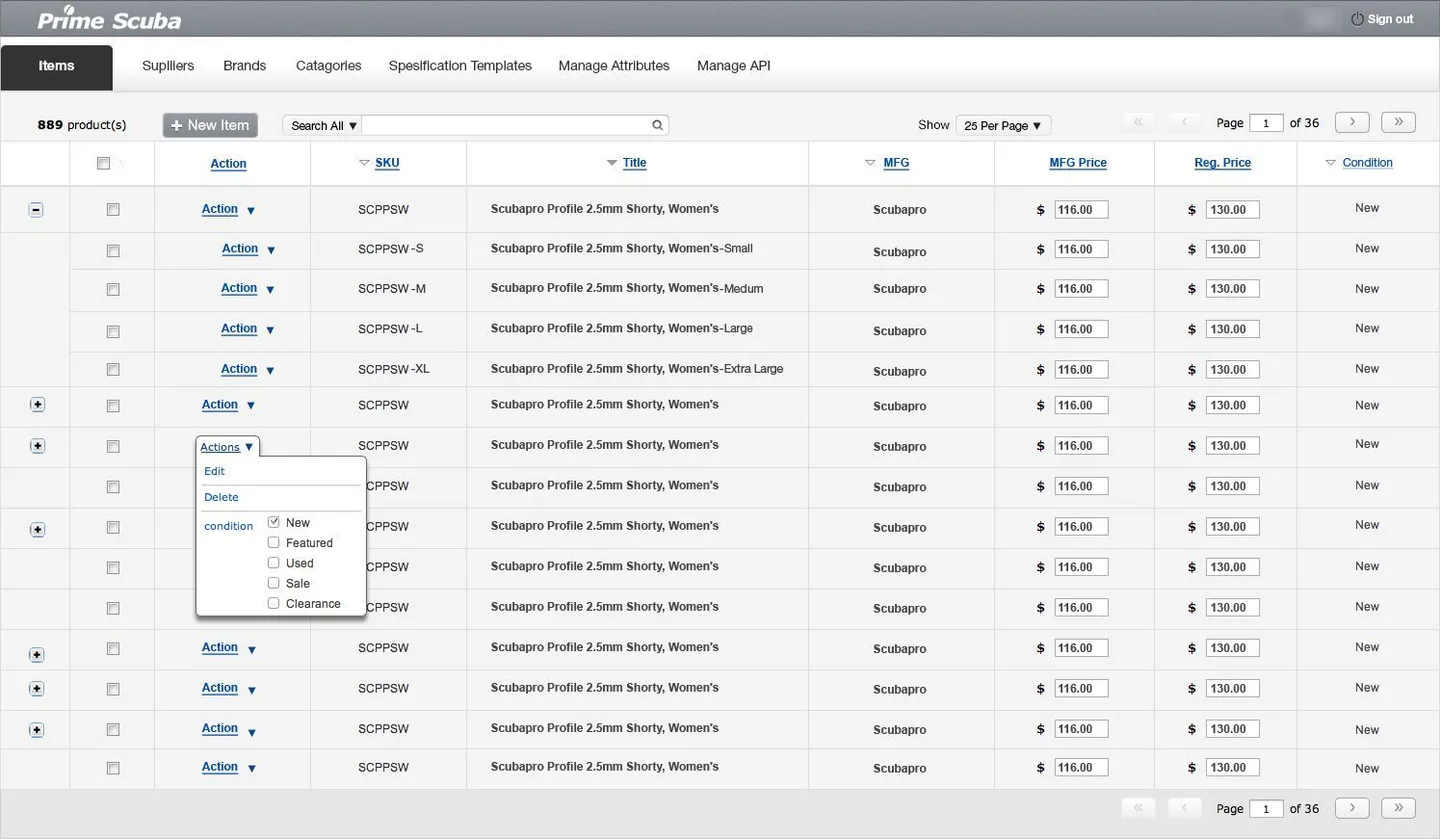
Prime Scuba: Magento store and product manager
A Magento redesign and re-platform of the Prime Scuba dive-gear store, plus a CakePHP product information manager that queues catalogue changes and pushes them to Magento.

Also MySQL and PHP, same industry
Insurance-ordering online store for a medical supplier
A PrestaShop store for breast pumps and accessories with insurance-covered ordering flows, a multi-step checkout, FSA and Tricare support and payment gateways.

Also AWS and MySQL, same industry
Top Tier Editing: quote calculator and order platform
A .NET Blazor quote calculator, order and checkout flow and back office for Top Tier Editing, an editing service: instant prices from admin-set rules, document upload with word count, Stripe and PayPal payments and scheduled emails.